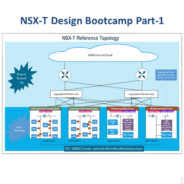
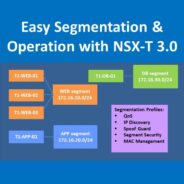
This is my first blog in this series. Using this NSX-T 3.0 Design Bootcamp 1: Overview, let’s start the discussion on some of the considerations and see why that is important. Clearly, when it comes to networking and security we have two different realms 1) Physical and 2) Virtual. It is apparent that the supremacy
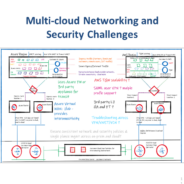
Explore multi-cloud networking and security challenges across AWS, Azure, and hybrid environments. Discover strategies to improve connectivity, visibility, and security.
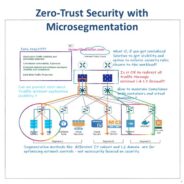
Learn how Zero Trust microsegmentation protects workloads, limits lateral movement, strengthens network security, and supports compliance across hybrid environments.
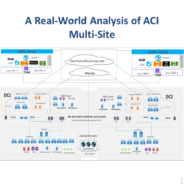
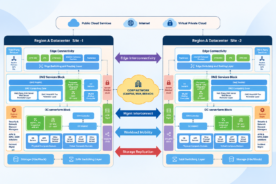
Explore Active-Active Data Center Design strategies for high availability, load balancing, disaster recovery, and resilient enterprise network architecture.
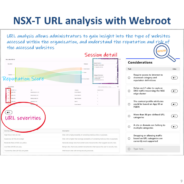
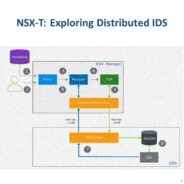
Using this blog “NSX-T: Exploring Distributed IDS” let’s examine distributed IDS features introduced part of NSX 3.0. and we will explore its architecture and key configuration details. Distributed intrusion detection uses network introspection to identify malicious intrusion attempts. This results in distributed intrusion detection to protects east-west traffic and detects L4 attacks. In fact, the
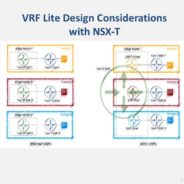
VRF-Lite is the latest capability added part of the NSX-T 3.0 release. Through this blog post “NSX-T 3.0 design consideration for VRF-lite”, let’s explore the benefits of VRF lite and its considerations from design and implementation perspectives. VRF-Lite Advantages Server virtualization admins usually struggle with the core networking concepts like VRF lite. Therefore, I recommend
Financial organizations are facing tremendous shifts in their business models, regulatory requirements, and the competitive landscape. Undoubtedly, it is always a key priority for CIO and CTO is to reduce the infrastructure CAPEX and OPEX. In this “NSX-T based DMZ Rack Design for Banking” blog, let’s look at how NSX improves DMZ environment for banking