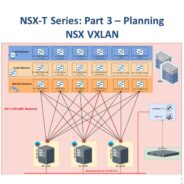
Learn how to plan and prepare VMware NSX-T overlay networking with this detailed, step-by-step guide. Explore the fundamentals of Tunnel Endpoints (TEPs) and VXLAN Tunnel Endpoints (VTEPs), understand how GENEVE encapsulation enables communication between ESXi transport nodes, and discover the importance of proper network planning before deploying NSX-T.
This guide explains how to prepare the underlying
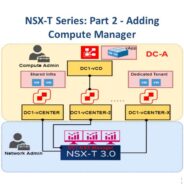
Explore how VMware NSX-T Tier-0 and Tier-1 gateways work together when they share the same Edge Cluster. This practical guide explains how Distributed Routers (DR) and Service Routers (SR) manage network traffic between virtual machines, ESXi hosts, NSX Edge nodes, and the external physical network.
Learn how northbound and southbound traffic flows through the NSX-T routing
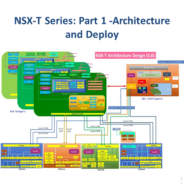
Explore VMware NSX-T architecture and deployment in this step-by-step guide. Learn how the management, control, and data planes work together to support software-defined networking. Understand NSX-T Manager deployment on ESXi and supported KVM environments, appliance sizing, three-node clustering, high availability using Virtual IP and load balancers, and the role of NSX Edge in Tier-0 and
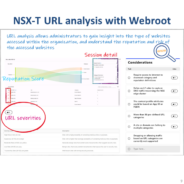
As cyber threats continue to evolve, protecting enterprise networks requires more than traditional firewalls and basic access controls.
Every day, employees and business applications connect to websites, cloud services, and external internet resources. While most of these connections support legitimate business activities, some may lead to malicious websites, phishing pages, malware distribution platforms, or other potentially
As enterprise data centers become more virtualized, managing network connectivity and security across different workloads is becoming increasingly important.
Traditional networking relies heavily on physical switches, VLANs, and hardware-based configurations. While these technologies remain essential, they can introduce operational complexity when organizations need to deploy new applications, connect virtual machines, or make frequent changes to their
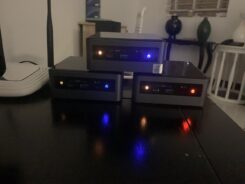
Discover how to build a practical VMware home lab using three Intel NUC10i7FNH servers. This hands-on guide explains the physical network topology, nested VMware ESXi configuration, vSphere Distributed Switch setup, and management and data plane connectivity. Learn how EVE-NG routers connect two simulated data centers, DC1 and DC2, for NSX-T 3.0 Federation testing. The article
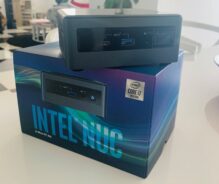
Learn how to build a VMware home lab using the Intel NUC10i7FNH mini PC in this practical, hands-on guide. Follow the complete journey of selecting compact, power-efficient hardware, configuring BIOS settings, and installing VMware ESXi. Explore the challenges of network adapter compatibility, customizing ESXi installation images with the required NIC drivers, and troubleshooting nested virtualization
As enterprise data centers become more complex, protecting applications and workloads from cyber threats has become a major priority for IT and security teams.
Traditionally, organizations focused on securing their network perimeter using firewalls, intrusion prevention systems, and other security technologies. While these controls remain important, they may not provide sufficient protection against threats that move
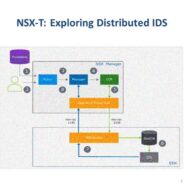
Explore how VMware NSX-T 3.0 Distributed IDS helps secure east-west traffic in virtualized data centers. This guide explains distributed intrusion detection architecture, deployment prerequisites, IDS signatures and severity levels, profile creation, security policies, and rule configuration. Learn how NSX Manager distributes IDS configurations to ESXi hosts, how suspicious network activity is detected, and how administrators
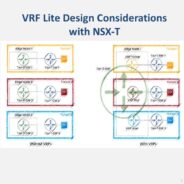
Learn how VRF-Lite in VMware NSX-T 3.0 helps organizations manage multiple networks within a shared data center while keeping their routing environments separate. This guide explains the key benefits of VRF-Lite, including support for overlapping IP addresses, better use of NSX Edge resources, and simpler management of multi-tenant networks. It also explores how parent Tier-0