Public Cloud Security: Challenges, Solutions, and Security Appliances
In this blog, we will discuss the basics of public cloud security. We will also explore how organizations can use security appliances to protect cloud workloads.
In addition, we will review the security options available from major Cloud Service Providers (CSPs).
Introduction
Many organizations now use the public cloud to run workloads such as virtual machines and containers. Developers also use cloud platforms to build, test, and deploy applications.
As cloud adoption grows, security teams need effective ways to protect these workloads. Organizations can use native cloud security services or deploy security appliances within the public cloud.
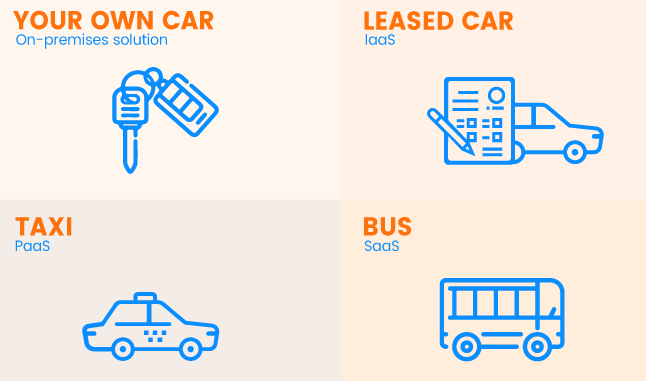
Public cloud providers offer three common service models:
- Infrastructure as a Service (IaaS): Organizations manage compute, storage, networking, and databases while the cloud provider manages the underlying infrastructure.
- Platform as a Service (PaaS): Developers use a managed platform to build, test, and deploy applications without managing the underlying infrastructure.
- Software as a Service (SaaS): Customers access software through a subscription-based service.
Each organization can choose the model that best fits its business and technical requirements.
However, security responsibilities change with each cloud service model. The shared responsibility model divides security responsibilities between the Cloud Service Provider and the customer.
Challenges in Public Cloud Security
One of the biggest challenges for network and security engineers is lack of visibility.
On-premises environments usually provide engineers with greater visibility into the infrastructure, network traffic, and packet flow. Public cloud environments can hide much of the underlying infrastructure.
As a result, network and security teams may find it harder to troubleshoot traffic and identify security issues.
Another major challenge involves the decentralized approach to security tools.
Organizations often use different tools to monitor, protect, and analyze cloud environments. This approach can improve flexibility, but it can also create operational complexity.
On the other hand, a completely centralized security model can introduce its own challenges. Therefore, organizations need to find the right balance between centralized visibility and distributed security controls.
What Vendors are offering
Several security vendors provide solutions for public cloud environments. These include Cisco, Palo Alto Networks, Fortinet, Check Point, and Dell.
Each vendor follows a different architecture and provides various security capabilities for cloud environments.
Cisco
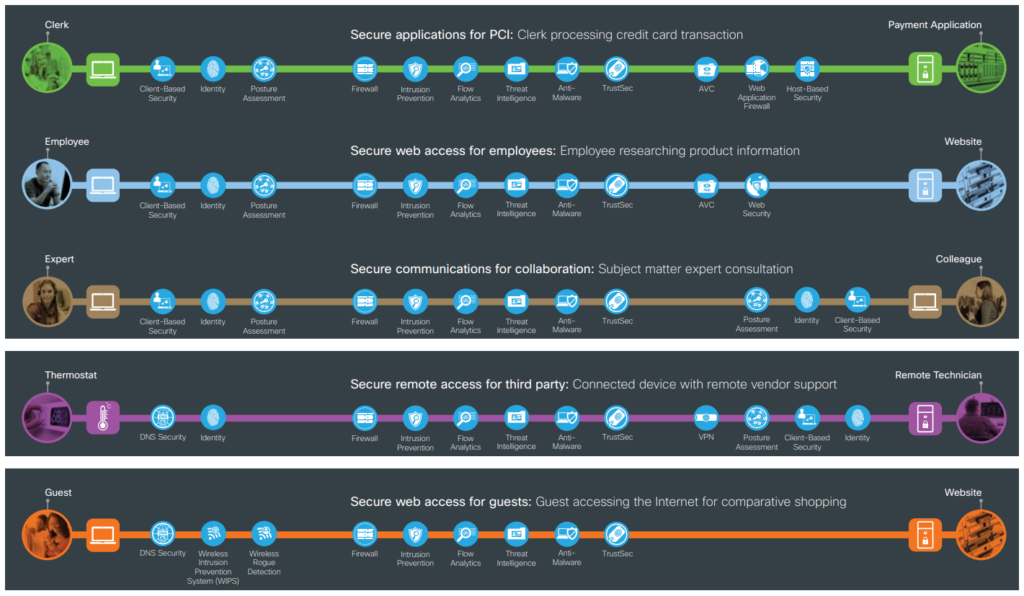
Various vendors( Cisco, Plao ALto, Fortinet, Checkpoint, Dell Firewall etc) have different model in public cloud to enhance security in public cloud, as an example Cisco define SASE model which includes the best practices and various services via their different products.
Their Firewall Firepower has different design model via which the security services are enabled on different public cloud. More design related blogs will be updated.
Palo Alto
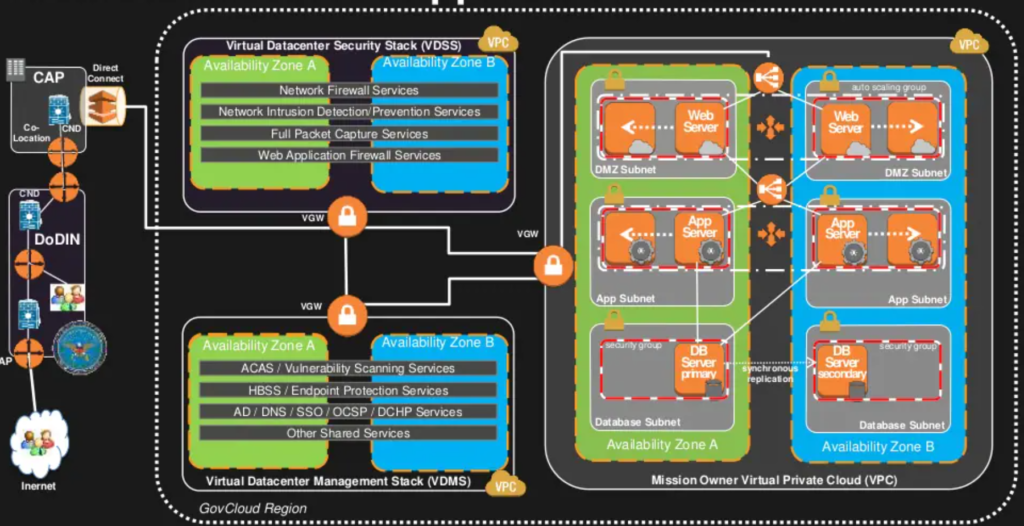
Similarly Palo Alto has matured design model and service integration with the CI/CD model for deployment with various applications. Being the industry leader in this field it gives the same feeling for network/security engineer to view the network activity via single glass pane. the architecture is commonly named as Secured Cloud Computing Architecture (SCCA)
Fortinet
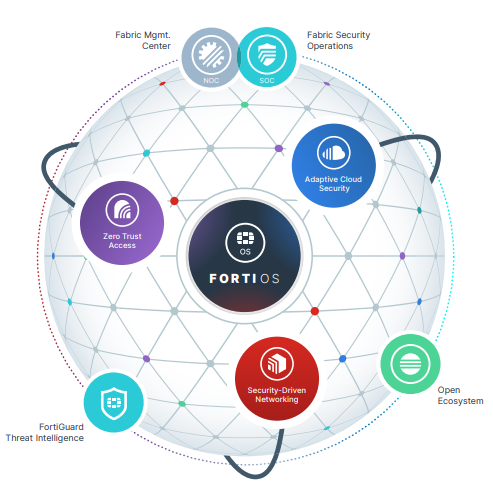
Fortinet is also famously used in Private Cloud space and have very good integration use cases in Public Cloud space, which includes services like auto-scaling, artificial intelligence and many more gives more elasticity in public cloud spaces. Fortinet terms their architecture as Fortinet Security Fabric.
Conclusion
Public cloud adoption continues to change how organizations design, deploy, and secure their IT environments.
However, this shift also creates new challenges for network and security teams. Limited visibility, distributed security tools, changing workloads, and different cloud service models can make security operations more complex.
Organizations therefore need a clear public cloud security strategy that combines visibility, network security, security appliances, and cloud-native security controls.
The right approach will depend on the organization’s workloads, cloud platform, security requirements, and operational model.
In our upcoming blogs, we will explore firewall deployment and design decisions for AWS, Azure, and Google Cloud.
You can also explore our related Network Bachelor articles:
- Azure IaaS Reference Architecture: A Quick Overview
- AWS IaaS Reference Architecture and Use Cases
- Architecting Enterprise Connectivity to the Public Clouds
Strengthen Your Public Cloud Security
Are you planning to move workloads to AWS, Azure, or Google Cloud?
Our team can help you evaluate your cloud network security architecture, identify security gaps, and design an approach that fits your infrastructure and business requirements.
Talk to our experts today to discuss your public cloud security requirements and build a stronger, more resilient cloud environment.

Private LLMaaS and its Business Opportunities
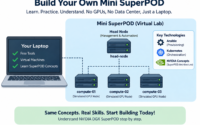
NVIDIA DGX SuperPOD: Build a Mini SuperPOD Lab Step by Step
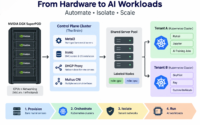
Bare Metal GPU Cloud for NVIDIA DGX SuperPOD: vMetal Workbook
About Author

abhishek
Cloud Platform Lead and AI Infrastructure Architect at e& enterprise, with 12+ years in data center, virtualization, security and AI infrastructure. I design and build private cloud and sovereign AI platforms, working with VMware (NSX-T, vSphere, vSAN, HCX, AVS, SRM), Kubernetes, Terraform and GPU inference infrastructure for LLMs. Previously served Networkers Home (CCIE instructor, trained around 50 CCIEs), VCE/EMC2, Cisco, VMware and Arista across TAC, consulting, design and training. Certifications: CCIE#48639 (Data Center and R&S), VCIX-DCV and NV, CKA, NVIDIA AI Infrastructure, Azure Solutions Architect Expert, Terraform Associate, Palo Alto PCNSE. LinkedIn: https://www.linkedin.com/in/abhishekkunal51/
Nice article
Thanks for the comment