Retina Scanning and Biometric Security: What You Need to Know About Privacy and Data Protection
Introduction: The Biometric Illusion
Many organizations consider biometric authentication a strong form of digital security. Attackers can guess passwords or intercept authentication codes through SIM-swapping. In some cases, they can also copy fingerprints. But your retina—the intricate, unalterable map of blood vessels at the back of your eye—feels entirely untouchable.
However, retina scanning involves more than identity verification. Organizations must also consider privacy, data protection, storage, and cybersecurity risks. Before using an optical scanner, understand what it captures and what information it may reveal. Also, consider how attackers could misuse biometric data and how privacy regulations help protect it.
What is a Retina Scan?
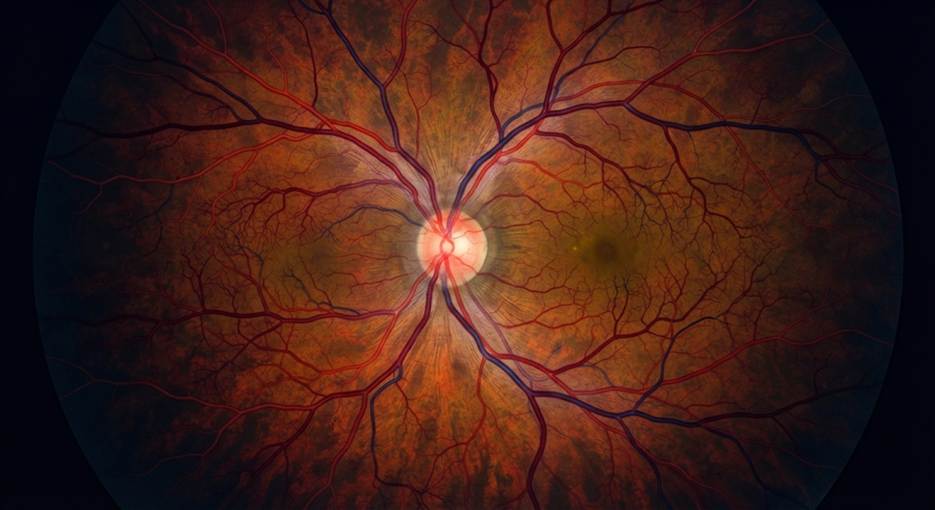
Unlike an iris scan (which maps the visible colored ring around your pupil using standard infrared light), a retina scan maps the unique pattern of blood vessels located on the inner surface of the posterior part of the eye.
How Does Retina Scanning Work?
The Technique
- Low-Intensity Infrared Light: The scanner projects a low-intensity beam of coherent infrared light through the pupil to illuminate the capillary bed of the retina.
- Vascular Mapping: Because blood vessels absorb light differently than surrounding tissue, the device captures a distinct, highly individualized vascular template.
- Template Generation: The scanner creates a mathematical template from the optical pattern. The system then uses this template for authentication. Because a person’s retinal pattern remains remarkably stable throughout their lifetime (and changes only in rare medical trauma or degenerative disease), it offers an exceptionally low False Acceptance Rate (FAR).
What Can a Retina Scan Identify? (Beyond Identity)
While primarily designed for high-security authentication, advanced high-resolution retinal imaging does not just see who you are—it can also reveal intimate physiological details that cross into sensitive medical territory.
- Identity Verification: Uniquely matches your vascular map against stored templates to grant or deny physical or digital access.
- Health and Systemic Conditions: Vascular tortuosity, micro-aneurysms, and arterial-venous nicking visible in retinal scans can indicate systemic health conditions such as hypertension, diabetes, cardiovascular disease, and neurological disorders.
- Unintended Medical Insights: High-fidelity retinal imaging may reveal physiological information beyond identity. For example, detailed retinal images can show vascular or metabolic changes that may relate to certain health conditions.
Retina Scan Security Risks: How Can Attackers Misuse Biometric Data?
However, weak security controls can expose biometric data to serious risks.
- Surveillance and Profiling: Organizations may create privacy risks when they retain raw retinal images. Attackers or unauthorized parties could access this data and use it for profiling based on physiological characteristics.
- Permanent Compromise: Unlike a compromised password or credit card number, you cannot change your retina. If biometric templates are leaked from a centralized database, the breach is irreversible for life.
- Coercion and Physical Vulnerability: High-security facilities relying solely on biometric gates can create physical security risks, where malicious actors might attempt to coerce authorized personnel to gain entry.
Protecting PII, Cameras, and Preventing Spoofing
Organizations need strong technical and operational controls to secure biometric systems.
- Template Protection (Hashing): Systems must never store raw retinal images. Instead, they should store irreversible cryptographic hashes (biometric templates) so that even if the database is breached, the original retinal map cannot be reconstructed.
- Liveness Detection (Anti-Spoofing): Modern scanners utilize liveness detection (analyzing micro-pupillary responses, blood flow, or optical coherence tomography) to prevent attackers from using high-resolution photographs, printed images, or artificial prosthetic eyes to bypass the system.
- Data Minimization: Cameras must be strictly restricted to capturing only the minimal necessary data required for authentication, avoiding peripheral facial captures or medical diagnostic overlays.
Governing Bodies and Compliance Frameworks
Because retinal data bridges the gap between identification and health metrics, it falls under some of the strictest global regulatory frameworks:
- GDPR (General Data Protection Regulation): In the European Union, biometric data used for the purpose of uniquely identifying a natural person is classified under Special Categories of Personal Data (Article 9), requiring explicit, verifiable consent and stringent security measures.
- HIPAA & Regional Health Laws: In environments where optical scans capture health indicators, medical privacy regulations govern how data is handled, stored, and shared.
- ISO/IEC Standards: International standards (such as ISO/IEC 19794-7 for biometric data interchange formats) dictate how biometric templates must be formatted, encrypted, and protected against exploitation.
Conclusion: Biometric Security Requires More Than a Retina Scan
Retina scanning can provide strong identity verification, but biometric authentication also introduces important security and privacy considerations.
Unlike a password, an individual’s biometric characteristics cannot simply be reset after a security incident. Therefore, organizations should protect biometric information throughout its lifecycle—from collection and processing to storage, access, retention, and deletion.
Strong biometric security requires more than deploying an advanced scanner. Organizations should minimize the data they collect, protect biometric templates, encrypt sensitive information, restrict access, monitor biometric infrastructure, and implement appropriate anti-spoofing controls.
Moreover, organizations should evaluate applicable privacy laws and biometric standards before deploying these systems. Under the GDPR, for example, biometric data processed to uniquely identify a person receives special-category protection. Eur-Lex
Ultimately, organizations should treat biometric authentication as one component of a broader identity and access management and Zero Trust security strategy.
The question is not simply, “Can this technology identify someone?”
Organizations should also ask:
“How securely can we protect the biometric data that makes that identification possible?”
Is Your Biometric Access Infrastructure Secure?
Biometric authentication is only as secure as the systems, networks, applications, and security controls protecting the biometric data behind it.
TREZBON Technologies LLC helps organizations assess and strengthen their cybersecurity architecture, identity security, network infrastructure, and data protection controls.
Whether you are reviewing an existing access-control environment or planning a broader Zero Trust and cybersecurity initiative, our team can help you identify security gaps and strengthen your infrastructure.
Ready to review your cybersecurity posture?
🌐 Visit TREZBON
📩 Talk to the TREZBON team
✉️ info@trezbon.com
Strengthen your infrastructure. Secure every identity. Safeguard critical data.

VMware Design Bootcamp-4: NSX-T and AVI Load-balancer
Gigamon TLS Decryption: Passive vs. Inline Architecture and TLS 1.3 Challenges
VMware vSAN Solution Analysis
About Author

Muhammad Marakkoottathil(MM)
Expert in the field of SDN, cloud computing, virtualization, active-active data center design & migration. Passionate about helping organizations to achieve their digital transformation objectives with strong 15+ years of experience in design, deployment, and managing heterogeneous network solutions across the industry verticals. Major Industry Certifications: Cisco CCIE, CCDP, VMware VCAP-NV_DESIGN, TOGAF, ITIL, NUTANIX NCSE, Google Cloud Architect, Azure Fundamentals More info please visit my page @ LinkedIn: https://www.linkedin.com/in/contactmm/