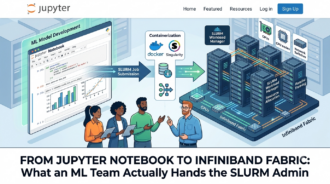
A network engineer’s field guide to the other side of the AI infrastructure stack If you’ve spent your career on fabric design and CCIE-grade network builds, the ML/LLM training world looks like a black box wrapped in a black box. A “job” shows up in the Slurm queue, it asks for 8 GPUs across 2
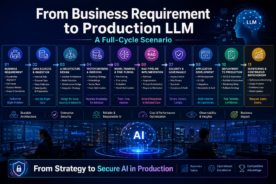
Every production LLM that answers a customer question or automates a workflow passed through the hands of five or six distinct roles before it ever served a single request. Each role hands off a well-defined artifact to the next — and when that handoff is fuzzy, that’s usually where projects stall for months. This post
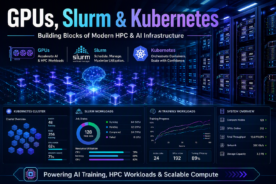
Every large-scale AI system — the model that answers your question, the recommendation engine on your favorite app, the vision model in a self-driving car — was trained and is served on infrastructure built from three foundational pieces: GPUs that do the actual computation, a scheduler that decides who gets to use them and when,
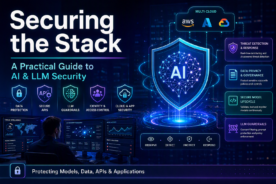
Enterprises are moving large language models from pilot projects into production faster than most security programs can adapt. The result is a new attack surface that doesn’t map cleanly onto traditional application security, network security, or data security playbooks — it borrows from all three and adds failure modes none of them anticipated. This post
Around 5 years ago I have completed the Aviatrix Certified Engineer (ACE) – Multicloud Network Associate when it was talk of the town. It’s tempting to file certifications like this under “resume line item” and move on. But this one is worth writing about, because the material addresses a failure pattern that shows up repeatedly
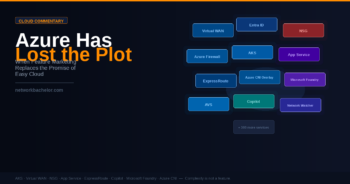
Cloud was supposed to remove friction. Provision compute in minutes, route packets without owning a single router, let infrastructure teams move at the speed of the business instead of the speed of a six-week change-board cycle. That was the pitch. A decade in, Azure increasingly delivers the opposite: a platform so layered with named services,
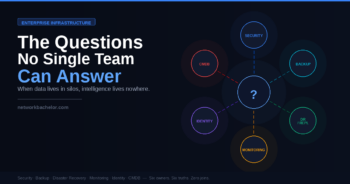
Every infrastructure team is sitting on a goldmine of data and quietly starving for answers. The data isn’t missing. It’s just scattered across owners who never join their tables. It’s a familiar Monday. An auditor asks a question that sounds trivial: “Show me every production server that has no endpoint protection and isn’t being backed up.” It
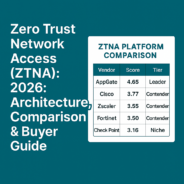
Compare 11 leading ZTNA platforms in 2026 across architecture, microsegmentation, identity security, hybrid cloud, OT/ICS support and enterprise access capabilities.
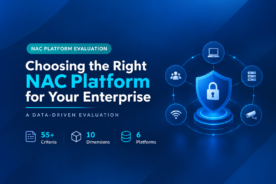
Network Access Control is no longer a checkbox. As GCC enterprises accelerate digital transformation, IT/OT convergence, and smart-building deployments, the risks of unmanaged, unclassified devices on your network have never been greater. UAE regulatory mandates — NCA, CBUAE, NESA — now require organizations to demonstrate continuous visibility, automated compliance enforcement, and rapid incident containment across
IntroductionLLMaaS is one of the services which is in great demand in the market, so the organization can utilize or get any managed service company to build their AI use cases. In past few days I have used multiple public LLM providers like Claude, Openrouter , Open AI, DeepSeek, etc to develop enterprise applications and