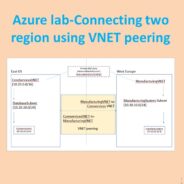
As businesses expand their cloud infrastructure, they often need applications, databases, and services running in different Azure regions to communicate with one another. However, connecting these environments efficiently requires a networking solution that provides reliable performance, secure communication, and straightforward management.
This is where Azure Global VNet Peering becomes useful.
Azure Global VNet Peering allows organizations to
Choosing the right cloud platform is an important decision for any business. Whether you're planning to move your applications to the cloud, modernize existing infrastructure, or build new digital services, selecting a platform that meets your technical and business requirements can make a significant difference.
Two of the most widely used cloud platforms are Amazon Web
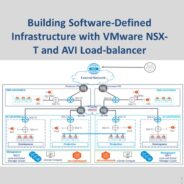
As modern data centers continue to evolve, organizations need networking solutions that can deliver applications securely, efficiently, and without unnecessary complexity.
Today, enterprise applications run across virtualized infrastructure, private clouds, and hybrid environments. As a result, IT teams must ensure that applications remain accessible, perform consistently, and scale according to changing business demands.
However, traditional networking and
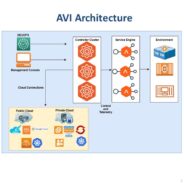
Explore NSX Advanced Load Balancer (AVI), its architecture, Controller, Service Engines, hybrid cloud features, autoscaling, and modern application delivery.
As more businesses move their applications, data, and critical infrastructure to the cloud, securing these environments has become an important responsibility for network and security engineers.
However, managing security in the public cloud is different from protecting a traditional on-premises data center.
Cloud platforms introduce new networking architectures, shared responsibility models, security services, and operational challenges. As
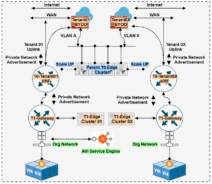
Learn how service providers can plan an NSX-V to NSX-T migration using VMware Cloud Director. This guide explains the differences between NSX-V and NSX-T networking, how Tier-0 and Tier-1 gateways support multi-tenant environments, and when to choose shared Tier-0, VRF-Lite, or dedicated network designs. It also explores tenant isolation, MPLS connectivity, NAT, IPsec, load balancing,
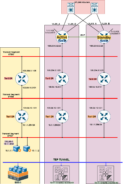
Discover how VMware NSX-T handles routing when Tier-0 and Tier-1 gateways use the same Edge Cluster. This practical guide explains the roles of Distributed Routers (DR) and Service Routers (SR), how northbound and southbound traffic moves between ESXi hosts and Edge nodes, and what network architects should consider when choosing Active-Active or Active-Standby routing. Learn
Preparing for the AWS Solutions Architect Associate exam can feel overwhelming, especially when you're trying to understand multiple AWS services, cloud architecture concepts, and real-world implementation scenarios.
With so many services to explore, knowing what to study and how to apply your knowledge can be challenging.
However, passing the exam isn't just about memorizing AWS service names
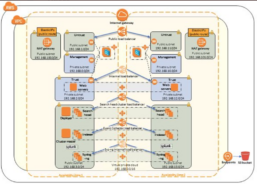
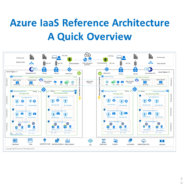
Building a reliable cloud infrastructure requires more than simply creating virtual machines and moving applications to the cloud. Businesses need a well-planned architecture that supports performance, security, scalability, and long-term operational efficiency.
This is where understanding Azure IaaS Reference Architecture becomes important.
Microsoft Azure Infrastructure as a Service (IaaS) provides the essential computing, storage, and networking resources
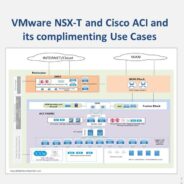
Discover how VMware NSX-T and Cisco ACI work together to build a more secure, flexible, and efficient data center network. This guide explains the key differences between both software-defined networking solutions and explores how their capabilities complement each other. Learn how VMware NSX-T supports microsegmentation, distributed firewalling, virtual networking, and workload security, while Cisco ACI